
Is it ok to use AI for acting headshots?
Why Actors Should Never Use AI for Their Headshots (And What Casting Directors Want Instead)
If you are an actor trying to navigate the costs of an acting career, the promise of generative artificial intelligence (AI) headshot apps sounds incredible. Upload five casual selfies, pay $15, and get dozens of "professional, casting-ready studio portraits" generated in minutes.
When you are weighing the cost of a professional headshot session against rent, acting classes, and union dues, it is natural to ask: Is it ok to use AI for acting headshots?
The short answer from casting directors, talent agents, and working industry professionals is an emphatic no.
“I don't submit AI pictures to clients/casting they are so bad.” - Katie DeLorenzi, Level Talent Group
“I just don’t think it’s ever a great idea.” - Katie Roland, Seven Model & Talent
“Actors who use AI headshots aren't really "professionals" in the industry. If you are doing this to make a living, an AI headshot is not going to work.” - Britny Faurote, Level Talent Group
While generative AI tools work reasonably well for corporate LinkedIn profiles or social media avatars, using AI-generated headshots for acting submissions is one of the fastest ways to destroy your credibility, waste casting directors' time, and burn bridges with talent agencies.
The fundamental truth of the acting industry is that your headshot is not a beauty shot—it is a business contract. When a casting director calls you in based on a photo, they are expecting the exact person in that photo to walk through the door or appear on a self-tape.
1. The Golden Rule of Casting: "Don't Waste My Time"
The number one complaint from casting directors across major markets like Los Angeles, New York, and Atlanta has always been inaccuracy. Nothing frustrates a casting team more than calling an actor in for a specific role—such as a weathered 40-something detective or a naturally freckled neighbor—only for an actor to show up looking completely different.
AI image generators inherently "idealize" faces. They smooth out skin texture, adjust facial symmetry, slim jawlines, alter eye depth, and erase minor imperfections.
Alpha Tyler, a veteran casting director and acting professor at SCAD, highlighted this exact issue regarding AI headshots in the audition room:
"Casting directors will still see the actor in person, if given an opportunity to audition, so we will know exactly what you look like. ... Casting wants to know what you're going to look like when you show up to set, and what the crew will see in your close up for emotional scenes. While it may seem like the AI is presenting the best version of you, a casting director is looking for something real, and that's the opposite of what AI is going to give them."
If your AI headshot strips away the very character features that make you unique, it actively works against your booking potential.
2. AI Cannot Capture Human "Subtext" or Emotion in the Eyes
Acting is living truthfully under imaginary circumstances. A human headshot photographer who understands the entertainment industry doesn't just push a button on a camera; they coach performance out of you.
During a professional headshot session, a skilled photographer directs your thoughts, micro-expressions, and energy:
For Commercial Shots: Warmth, approachability, and engagement in the eyes.
For Theatrical/Dramatic Shots: Intensity, vulnerability, mystery, and narrative weight.
AI algorithms do not understand micro-expressions or emotional subtext. AI simply composite pixel patterns pulled from thousands of web images onto your face. The result is almost always what industry insiders call the "dead eye effect"—a glossy, synthetic portrait where the subject looks attractive, but emotionally empty.
Casting directors look directly at an actor’s eyes to see if there is an active internal life. A synthetic image cannot fake human intent.
3. The "Uncanny Valley" and AI Detection
Casting directors look at thousands of headshots every single week on platforms like Actors Access and Casting Networks. They have spent years training their eyes to evaluate human faces under studio lighting.
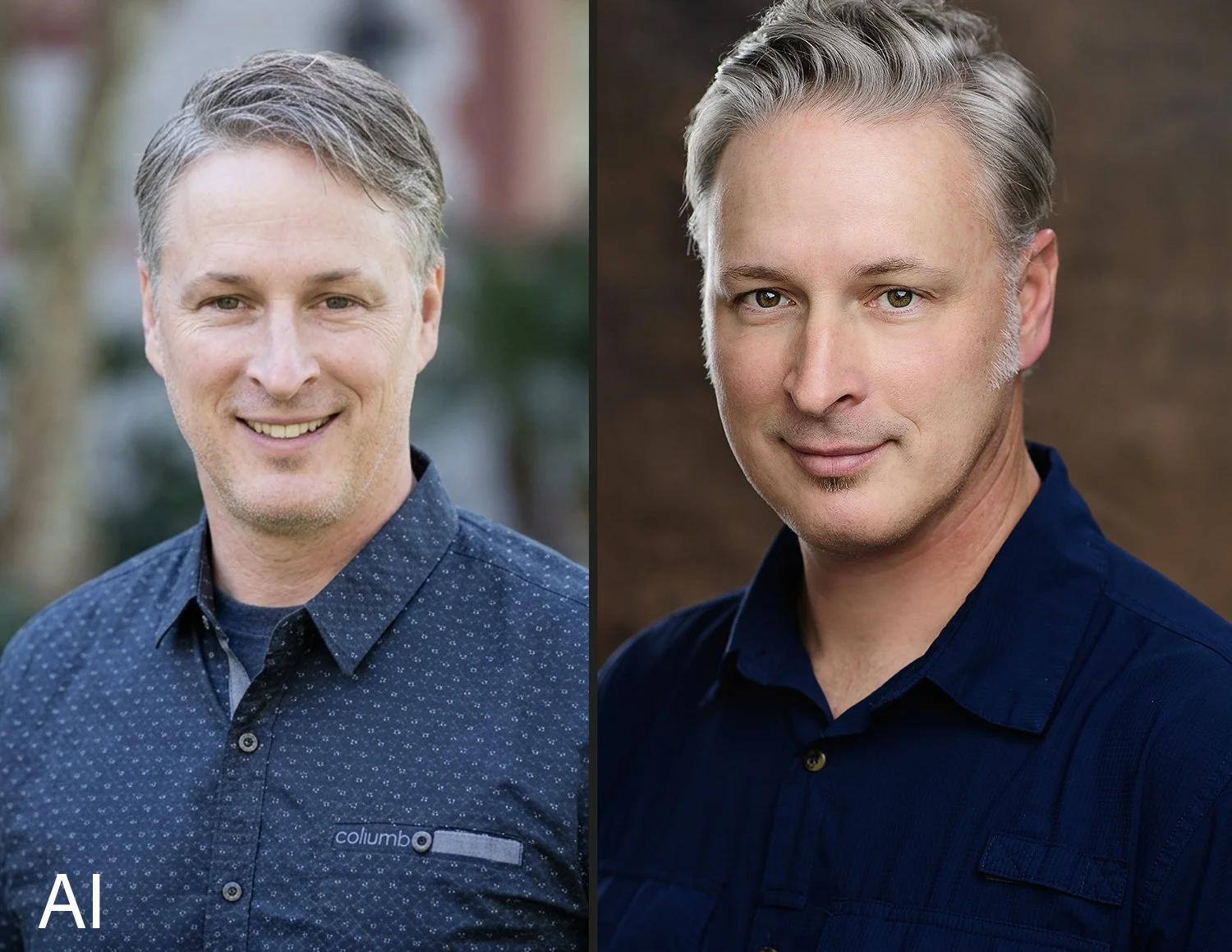
Because of this daily volume, casting teams spot AI-generated headshots within seconds. AI images frequently suffer from subtle visual glitches known as the "Uncanny Valley":
Plastic Skin Texture: Complete lack of natural skin pores, fine lines, or natural skin tones.
Anatomy Glitches: Strange ear lobe shapes, asymmetrical pupils, floating hair strands, or unnatural teeth structures.
Inconsistent Lighting: Background light source that doesn't match the shadows cast across the face.
Synthetic Wardrobe: Fabrics that look painted on or lack realistic seams and weight.
When a casting director sees an AI-generated headshot, it signals that the actor is either unprofessional or unwilling to invest in their own career.
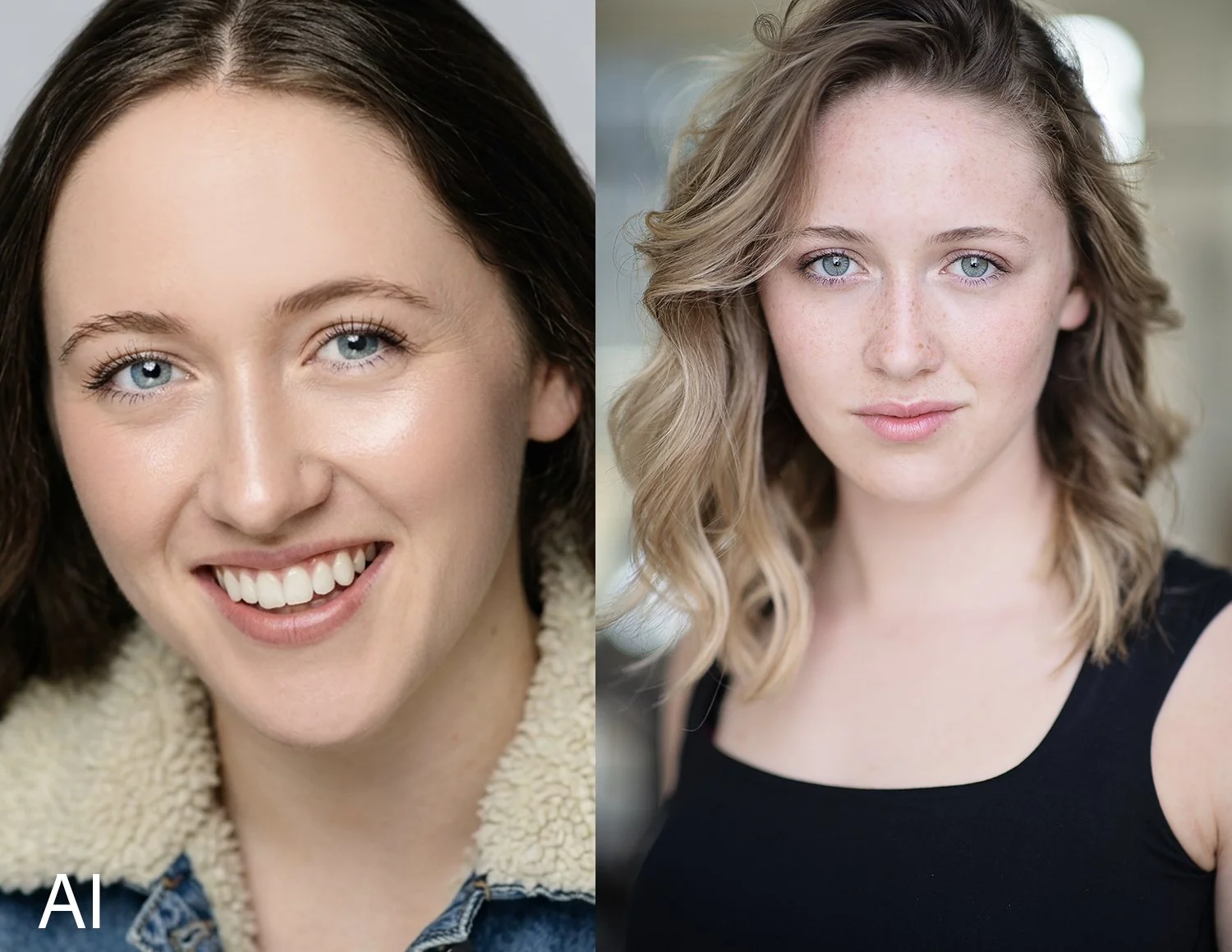
This sweet actress had no freckles, over-softened skin, hair that was the wrong color, and her eyes were too fake looking.
4. The Risk of Being Blacklisted by Local Casting Offices
The entertainment industry is smaller than most actors realize. Casting directors rely on trust; when they pitch an actor to a director or executive producer, their own professional reputation is on the line.
If an actor submits an AI headshot, gets selected based on that image, and then turns in a self-tape or attends an in-person callback looking like a different person, the casting director feels misled.
As noted in industry analysis on casting standards, misrepresenting your physical appearance through synthetic alterations carries severe consequences:
"A casting director who calls an actor in based on a headshot and finds a completely different person standing in the room does not just pass on that role. They remember. They tell colleagues. In the tight professional community, a reputation for misrepresentation can stall a career before it starts."
Using an AI avatar isn't viewed as a clever life-hack; it is viewed as misrepresentation.
AI Headshots vs. Professional Headshots: A Comparison
FeatureAI-Generated HeadshotsProfessional Studio PhotographyAccuracy to Real LifeLow (Smooths skin, alters features)100% Accurate (Captures true physical brand)Eye Connection & ExpressionDead, synthetic, composite gazeAuthentic micro-expressions & active internal lifeCasting Director ReceptionSkeptical, frequently rejectedIndustry Standard (Expected by union/agents)Lighting & DepthAlgorithmic approximationsProfessional lighting tailored to face shapeLong-Term Career RiskHigh (Damages industry trust)Zero Risk (Establishes professionalism)
5. What Talent Agents and Unions Say About AI
Talent agencies rely on headshots to pitch actors to major networks, commercial brands, and film productions. When you sign with an agent, one of their first steps is auditing your marketing materials.
Organizations like SAG-AFTRA have taken strong stances on digital replica rights, authenticity, and the preservation of human craft in entertainment. Major agency representatives routinely advise actors against cutting corners with AI headshots for three key reasons:
Brand Confusion: Agents cannot accurately pitch you for specific breakdowns (e.g., "blue-collar worker," "lawyer," "quirky best friend") if your headshots are stylized AI approximations.
Platform Policies: Casting databases actively update submission guidelines to prioritize authentic human photography over AI renders.
Copyright Ownership: AI-generated images generally cannot be copyrighted under current U.S. law, creating legal ambiguities regarding ownership and promotional usage rights.
How to Get Real Headshots on a Budget
The primary reason actors consider AI is financial pressure. Studio photography can feel cost-prohibitive, especially when starting out. However, there are authentic ways to get professional headshots without turning to synthetic AI generators:
Look for Referral Programs or Partner Perks: Many regional headshot photographers offer special packages or full gallery upgrades through local acting schools or agencies.
Book "Mini Sessions": Instead of a full 4-look session, ask local photographers if they offer 1-look or 2-look portfolio maintenance sessions at a reduced rate.
Work with Emerging Headshot Photographers: Connect with skilled photography students or assistants building their headshot portfolio. As long as a real camera, real lighting, and real direction are involved, the output remains authentic.
Is It Ever OK to Use AI for Acting Headshots?
If you are evaluating whether to use AI headshot generators, keep this rule of thumb in mind:
For Corporate LinkedIn profiles, personal blogs, or casual avatars? Yes, AI headshots are fine, although not authentic.
For acting submissions, casting profiles, agent meetings, or union auditions? No, absolutely not.
In the acting industry, your face and your authentic human energy are your product. Erasing that authenticity with an AI algorithm removes the exact thing casting directors are looking to hire: YOU.
Invest in real photography, work with a photographer who knows how to direct actors, and show up to your auditions with confidence, knowing your headshot represents the real talent ready to step on set.